Orchard Wharf has Planning Consent

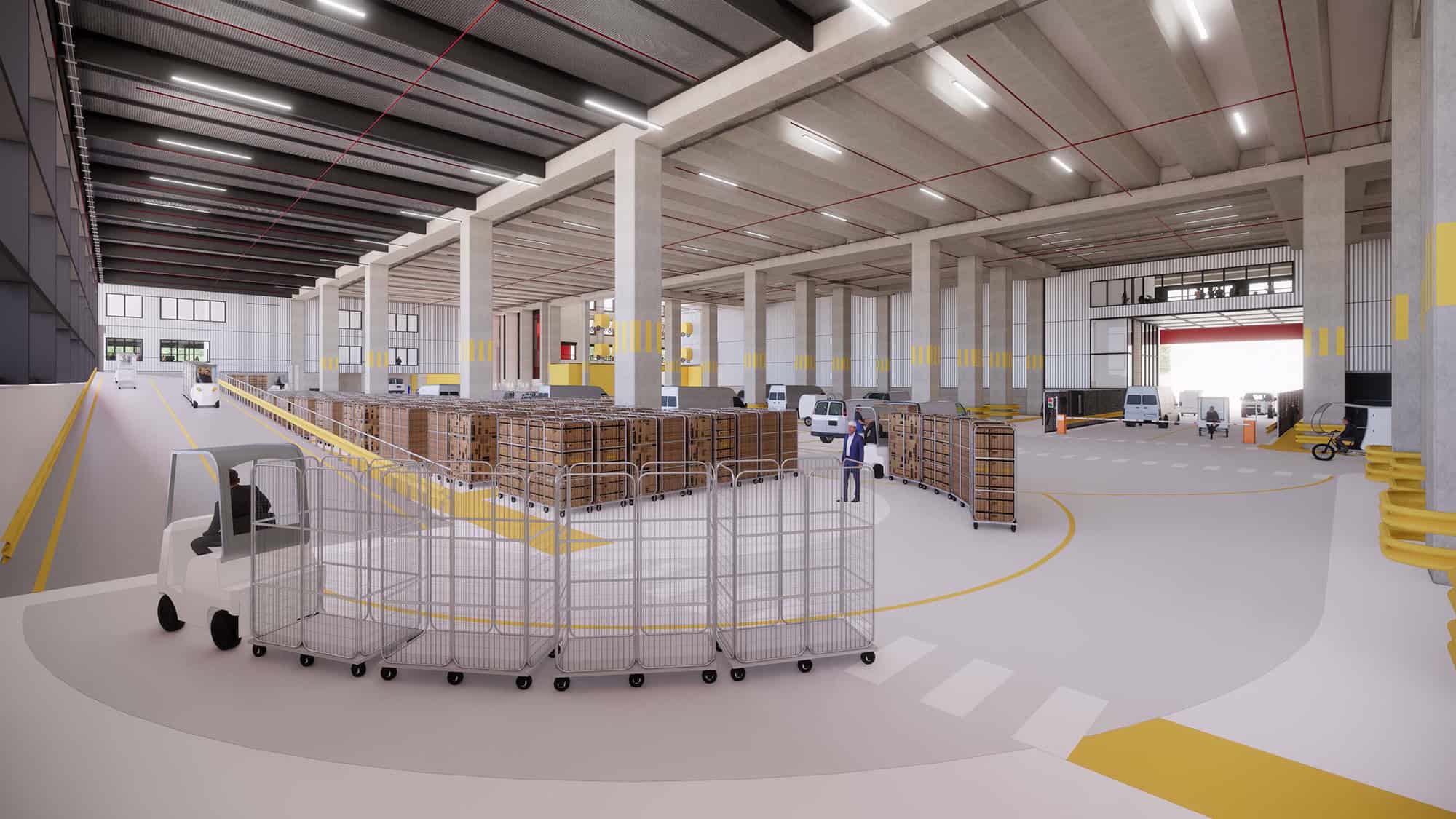 Internal view
We are delighted that Orchard Wharf unanimously secured planning consent from the London Borough of Tower Hamlets last week.
Our design role as the Wharf Architect for this hybrid logistics and residential scheme has been a great collaborative journey working with Regal London and the wider design team to create this innovative, future proofed and operationally agile safeguarded wharf for current and future generations. It is blended with 208 new affordable homes and 1,365 student beds through a people focused and biodiverse public realm as well as a specialist driven technical design process.
The unique hybrid design approach that blends the waterborne industrial with the residential uses and public realm was originated and is being led by Tom Alexander as both a director at Aukett Swanke, and now founder of Tom Alexander Design Team, with a new partnership established between the two talented teams.
Tom described the planning approval as “a significant moment in London’s sustainable evolution of river side design and its positive engagement with hybrid uses for urban intensification. One river boat delivery can replace 20 to 30 road trucks, the agile Wharf building can enable generations of multiple river use operations, students can be inspired by the blended community and the people of Tower Hamlets have affordable homes and gardens with spectacular views.”
The reactivated wharf is both traditional in provision and innovative in achieving this, and will be home to Thames Clipper Logistics for their new high speed light freight river operation, taking cargo along the river in electric vessels, onto the Wharf and out to the neighbourhood via cargo bikes and e-vans, a leap forward for London as it enables a significant reduction in road vehicle movements. It will incorporate an all-tide pontoon and pivoting canting brow link to the river side and is enabled for alternative waterborne loading systems.
Its people and environmental design attributes include passive cooling and ventilation across the wharf volume, natural light for wellbeing and to limit energy needs, a 100 year plus agile use chassis with column spans up to 19m and an 11.5m clear height, thermal mass for temperature moderation, a biodiverse and water managed roof landscape, wellbeing and amenity places, active frontages with engaging views in and out on the land side and two way riverside visibility of the new operation through a distinctive 80m wide access zone with its solar and acoustic canopy facing the Greenwich Dome on the South of the river.
It is inherently beneficial to the wider community through its site intensification for both new employment and new homes provision, whilst primarily safeguarding its river wharf use.
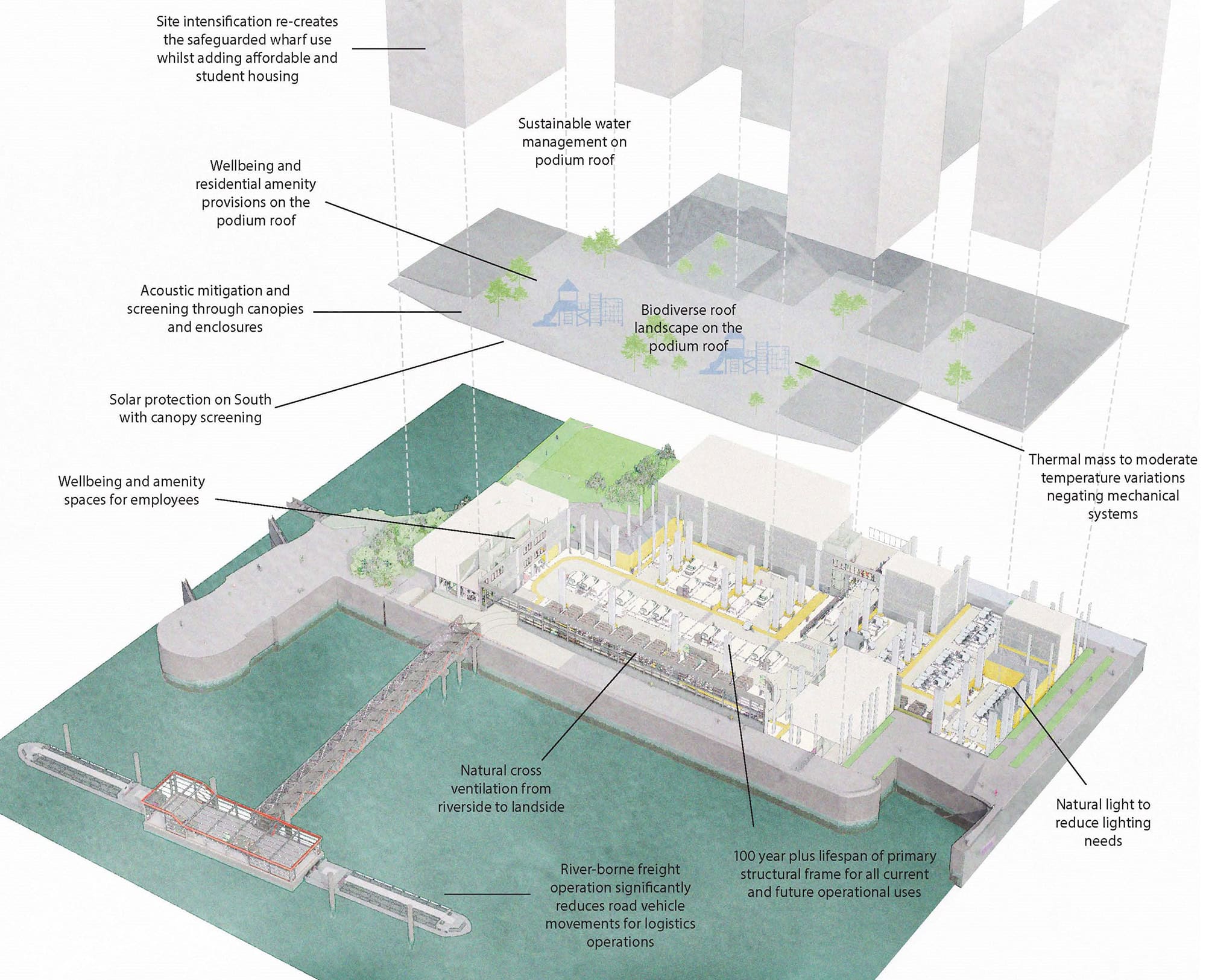 Overview and sustainability
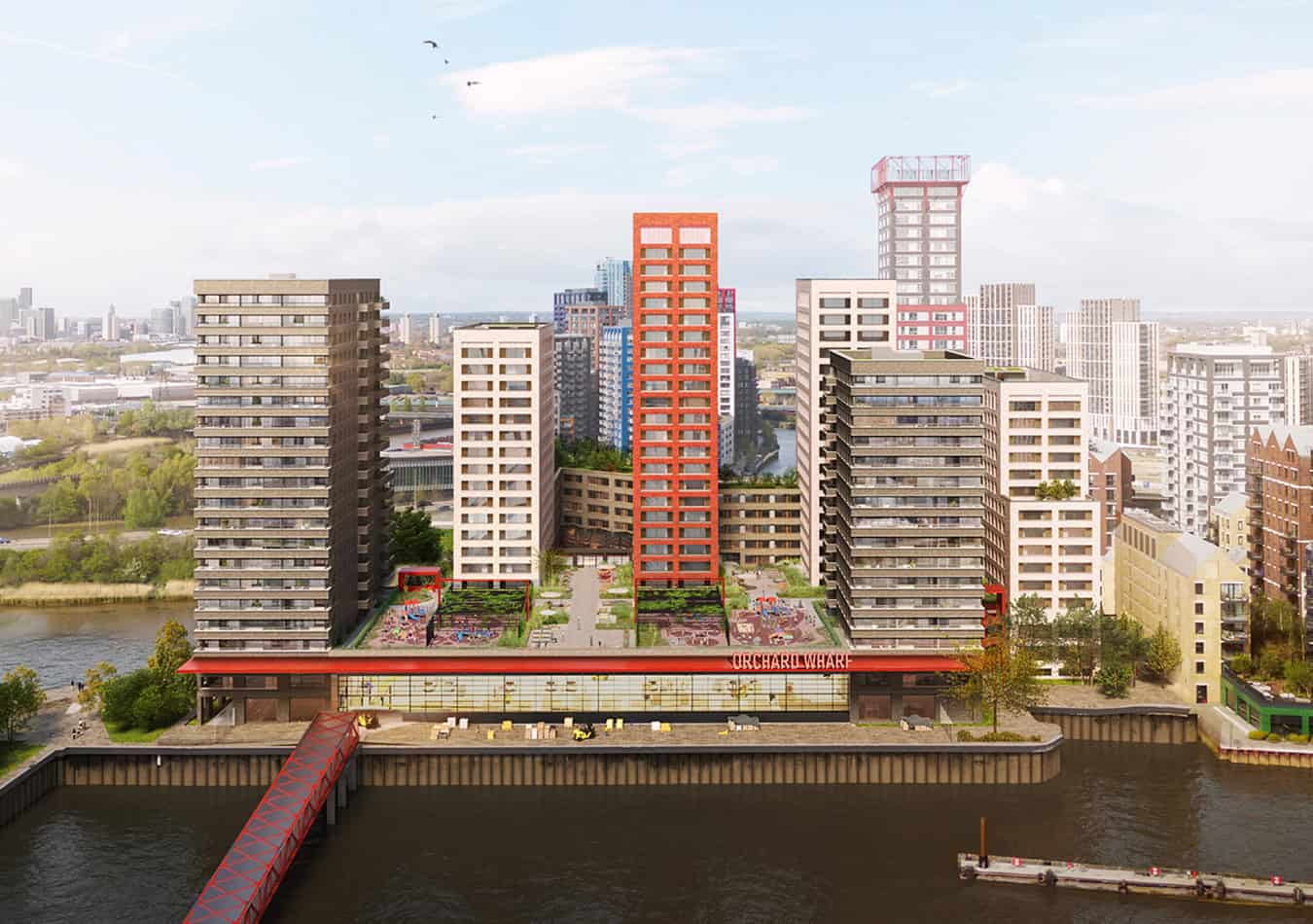 River view of the development (courtesy of Howells)